
Dental implants in Switzerland: when are they really necessary?
Introduction
Losing a tooth is a common occurrence.
The “dental implant” solution is well known today—but is it always necessary?
Between urgency, aesthetics, and function, it is important to understand:
- when an implant is truly indicated,
- what the possible alternatives are,
- and which medical criteria should guide the decision.
What is a dental implant?
An implant is an artificial titanium root inserted into the bone to replace a missing tooth.
It then allows for the attachment of:
- a crown,
- a bridge,
- or a stabilized prosthesis.
The goal is to restore:
- chewing function,
- aesthetics,
- and the stability of the dental arch.
In which cases is an implant indicated?
An implant may be recommended when:
- a tooth is missing or cannot be saved,
- neighboring teeth are healthy,
- there is sufficient bone,
- general health permits it.
It is particularly relevant when:
- you want to avoid grinding down adjacent teeth,
- long-term stability is a priority,
- the solution needs to be durable.
Is an implant always the best solution?
Is an implant always the best solution?
No.
An implant is not systematically indicated.
In certain cases:
- a bridge may be more suitable,
- a removable solution may suffice,
- preserving the natural tooth remains preferable.
The decision depends on:
- bone condition,
- the medical context,
- patient expectations,
- and the long-term prognosis.
Emergency implants: is it possible?
In certain situations, an implant can be placed immediately after an extraction.
But this is not systematic.
The criteria are strict:
- absence of significant active infection,
- sufficient bone quality,
- adequate primary stability.
Each situation is evaluated individually.
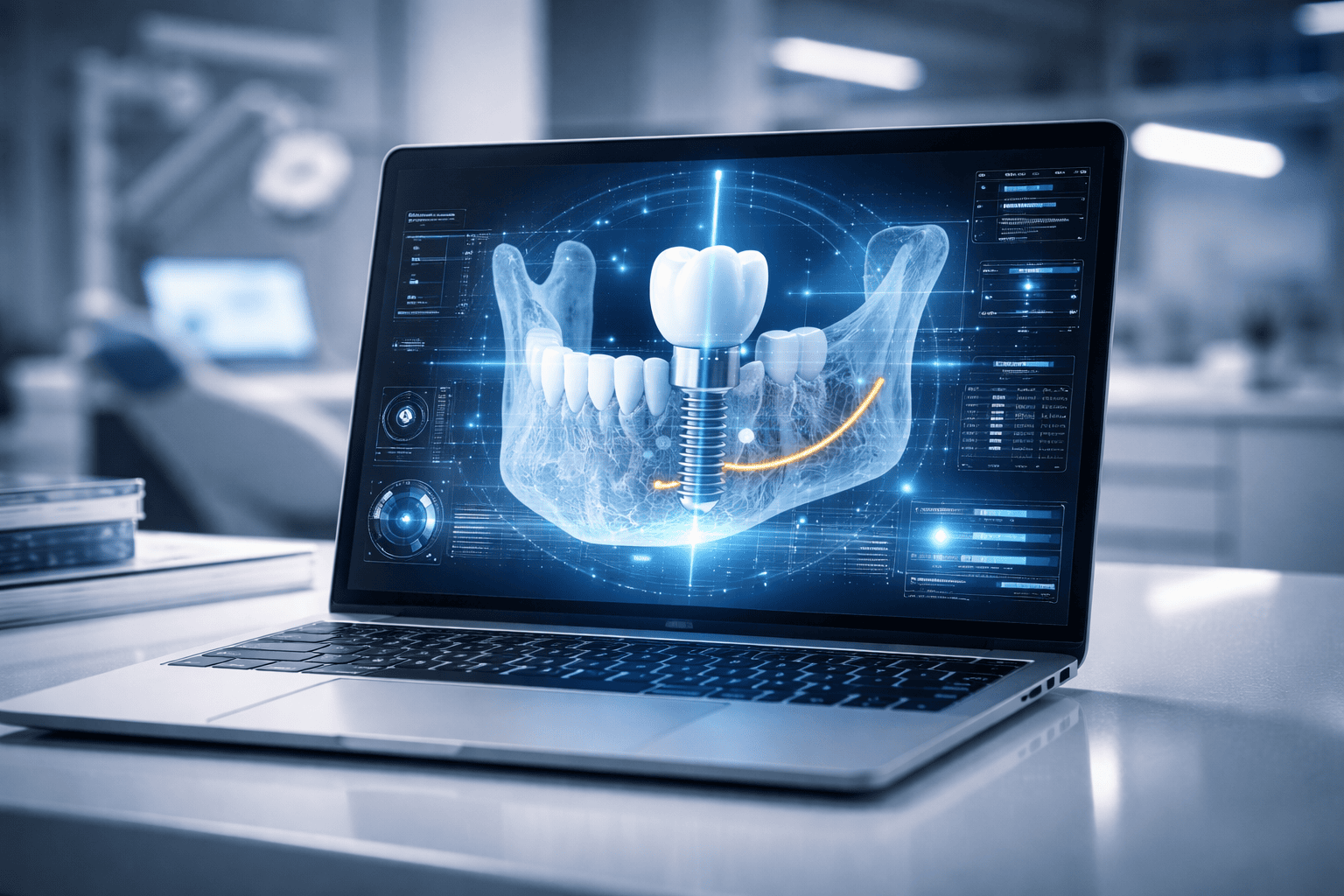
Implants and digital dentistry
- precise analysis of bone volume,
- optimized positioning of the implant,
- anticipating the prosthetic result.
This approach improves precision but does not replace clinical judgment.
Limitations to be aware of
An implant is not:
- a natural tooth,
- a “magic” solution,
- or maintenance-free.
It requires:
- rigorous hygiene,
- regular follow-up,
- long-term monitoring.
How to know if you are a candidate?
A clinical evaluation helps determine:
- if an implant is indicated,
- if a more suitable alternative exists,
- if bone preparation is necessary.
The decision must be medical, not commercial.
Conclusion
A dental implant can be a reliable and durable solution.
But it must be indicated with rigor, taking into account:
- the biological context,
- function,
- and the patient’s goals.
Each case deserves a personalized analysis.