
Detached or Broken Dental Crown in Switzerland: What to Do in an Emergency?
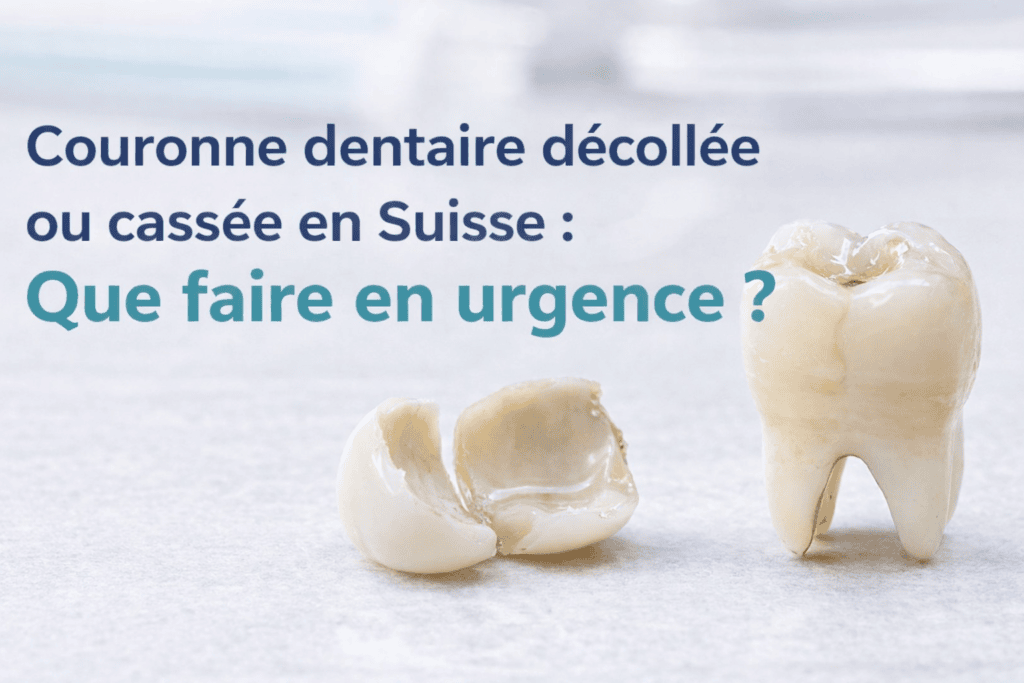
A dental crown can become detached or break unexpectedly: while eating, after an impact, or simply over time.
Even if pain is not always immediate, this is a situation that should be taken seriously to avoid complications.
Knowing what to do immediately and when to seek help often helps preserve the tooth and the restoration.
Why a Dental Crown Can Become Detached or Break
Several factors can be involved:
- natural wear of the adhesive or cement
- significant chewing forces
- bruxism (teeth grinding)
- underlying decay
- impact or trauma
- weakened old crown
A dislodged crown is never insignificant: the tooth underneath becomes vulnerable.
What to Do Immediately if a Crown Becomes Detached
While waiting for a dentist’s appointment, here are the right steps:
- gently remove the crown if it is loose
- store the crown in a clean, dry place
- avoid chewing on the affected side
- protect the exposed tooth if it is sensitive
- maintain gentle and thorough oral hygiene
It is not recommended to re-cement a crown yourself with unsuitable products.
Is it a dental emergency?
A detached crown constitutes an organized dental emergency, even in the absence of immediate pain.
A prompt consultation is recommended if:
- the tooth is sensitive or painful
- the tooth is exposed
- the crown is cracked or broken
- swelling or discomfort appears
The earlier the intervention, the more possible it is to reuse or replace the crown without extensive treatment.
Immediate Emergency vs. Organized Emergency: Why It Matters
An immediate emergency aims to:
- protect the exposed tooth
- alleviate discomfort
- prevent rapid worsening
An organized emergency then allows for:
- evaluating the condition of the tooth
- checking the fit or integrity of the crown
- planning a lasting solution
This structured approach avoids repeated temporary repairs and promotes reliable long-term results.
Solutions for a Detached or Broken Crown
Depending on the clinical situation, several options can be considered:
- re-cementing the existing crown if it is intact
- fabrication of a new crown
- on-site digital restoration
- adapting the solution according to the condition of the supporting tooth
Thanks to digital dentistry, some situations can be managed in a single visit, with precision and comfort.
What happens if I wait too long?
Waiting can lead to:
- increasing sensitivity
- decay under the crown
- tooth fracture
- need for more invasive treatment
A dislodged crown is rarely urgent in terms of pain, but always urgent in a preventive sense.
Frequently Asked Questions
Can I eat with a detached crown?
It is best to avoid doing so until your appointment.
Can the crown be re-cemented?
Yes, in some cases, if it is intact and the tooth is healthy.
Is it painful?
Not always, but sensitivity can appear quickly.
Conclusion
A detached or broken dental crown requires an appropriate response.
Prompt, immediate, and organized care often helps avoid complications and preserve the tooth.
Need a quick and structured solution?
Dental Swiss Clinics offers emergency care integrating digital dentistry.