
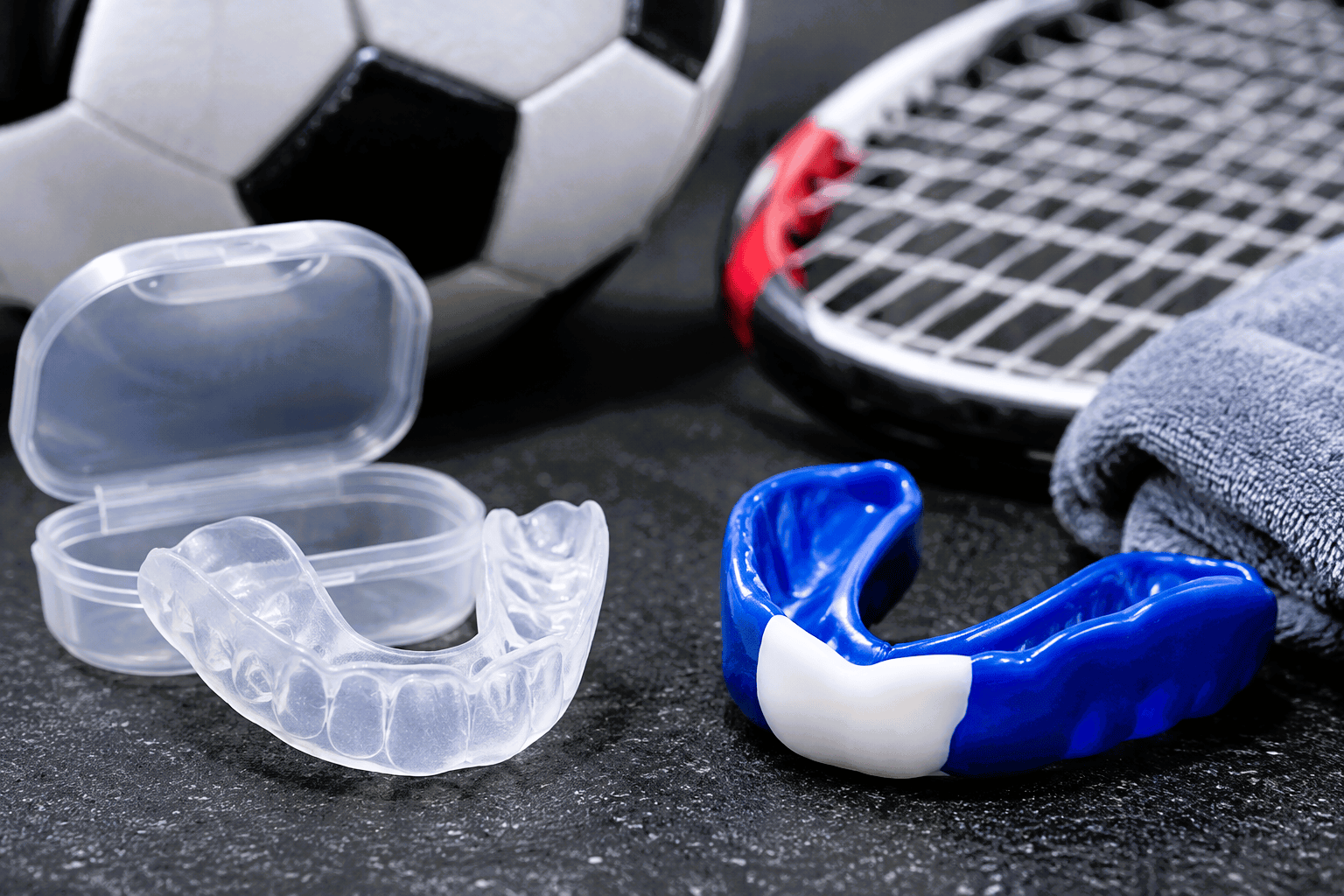
More sports carry a risk of dental injury than you might think: MMA, boxing, Brazilian Jiu-Jitsu, rugby, hockey, mountain biking, scooter riding, roller skating and skateboarding. In each of these activities, a blow to the mouth can cause a tooth fracture, displacement or even the loss of a permanent tooth.
A mouthguard remains the best protection. But a question often comes up during consultations: do you always need a custom-made mouthguard from the clinic, or can a store-bought kit be enough?
My position at Dental Swiss Clinics in Montreux is nuanced and honest: both options have their place, depending on the circumstances.
The current market
It is important to be clear from the outset. In my practice, demand for custom-made mouthguards remains low.
Most recreational and competitive athletes use mouthguards they make themselves from store-bought kits or kits purchased online. These kits work by thermoforming: the material is heated in water, then bitten into so that it takes the shape of the teeth.
This option should not be dismissed. In many situations, it provides adequate protection at a much lower cost than a custom-made version. It is important to be honest about this.
When a store-bought kit is enough
In several situations, a self-molded mouthguard provides reasonable protection.
Recreational or amateur sports
Someone who occasionally practices BJJ, boxing, rugby or another sport with a moderate risk of injury may find a store-bought kit entirely adequate. Exposure to risk is limited, and the protection provided is generally sufficient.
Children who ride scooters, roller skate, skateboard or mountain bike
For children who take part in these wheeled activities, where falls are a risk, I strongly recommend a mouthguard, even a basic one. An injury to a newly erupted permanent tooth can have lasting consequences. A well-fitted store-bought kit is far preferable to no protection at all.
Many parents do not realize that scooter riding and skateboarding are statistically associated with a significant risk of dental injury, much more so than some combat sports practiced at a club.
Growth and changing teeth
For growing children whose teeth are constantly changing, a custom-made mouthguard quickly becomes obsolete. A store-bought kit that can be replaced at a lower cost is sometimes better suited to these biological changes.
When a custom-made mouthguard is truly necessary
Conversely, some situations clearly warrant a custom-made mouthguard.
High-level competitors in intense contact sports
In MMA particularly, which combines striking and ground fighting at high intensity, exposure to risk is considerably greater. A custom-made mouthguard offers superior protection, comfort and stability. Competitors can breathe more easily and communicate more clearly, while the mouthguard stays in place during action.
Athletes with extensive dental restorations
For a patient with crowns, veneers, bridges or implants in the front of the mouth, there is a significant financial and biological investment to protect. A custom-made mouthguard that precisely conforms to the shape of their restorations provides appropriate protection.
Athletes undergoing orthodontic treatment
A patient with a fixed orthodontic appliance (braces) generally cannot use a standard store-bought kit, as it will not fit properly over the braces. A custom-made mouthguard, or a specific “orthodontic” model designed to allow room for tooth movement, becomes necessary.
Comfort and performance as priorities
Some competitors or dedicated athletes want equipment that reflects their commitment: maximum comfort, easier breathing, clear communication and a seamless fit. A custom-made mouthguard meets these requirements.
The real benefits of a custom-made mouthguard
When indicated, a custom-made mouthguard offers several tangible benefits.
Precise anatomical fit
Made using a digital intraoral scan at the clinic, the mouthguard conforms exactly to the shape of your teeth and palate. No unnecessary layers, pressure points or instability.
Superior comfort
The precise fit allows easier breathing, clearer communication and a more comfortable experience during sports. Many athletes who switch to a custom-made mouthguard report unparalleled comfort.
Stability during action
A custom-made mouthguard stays in place during exertion, impacts and changes in position. A self-molded kit can sometimes shift or fall out at a critical moment.
Digital manufacturing
At the clinic, two approaches are possible depending on the case:
- Direct 3D printing using biocompatible material
- A 3D-printed model followed by thermoforming (pressing) with high-quality material
Both approaches produce excellent results. The choice depends on the clinical case and the demands of the sport.
My approach during consultations
When a patient asks me about mouthguards, my approach is honest.
First step: understand the situation
Which sport? How often? At what level? What is the condition of the teeth (restorations, orthodontics, etc.)? What is the patient’s experience and what are their concerns (previous injury, parental concerns, comfort requirements)?
Second step: tailored advice, not an automatic sale
If the situation clearly warrants a custom-made mouthguard, I explain why and offer one. If a store-bought kit is reasonably sufficient, I say so too. The patient leaves with the information needed to make an informed decision, even if that decision does not involve treatment at my clinic.
Third step: practical advice in every case
For patients who choose a store-bought kit, I provide practical advice on how to mold it properly, care for it, when to replace it and what to watch out for. Respecting patients means educating them, even when no clinical service is provided at the clinic.
Protecting children’s teeth during wheeled sports
There is one point I want to emphasize for parents.
Scooter riding, roller skating, skateboarding and mountain biking are often seen as fun and low-risk, yet statistics show that they cause many dental injuries in children. A forward fall from a low height can be enough to break a newly erupted permanent incisor.
My advice to parents: if your child regularly takes part in one of these sports, a mouthguard is strongly recommended, even a basic one. A well-fitted store-bought kit is inexpensive and can prevent an injury with lasting consequences for their permanent teeth.
To learn more about treating a broken tooth, see our article Broken or fractured tooth: what to do.
A case from our clinic
We recently fitted a young Brazilian Jiu-Jitsu competitor with a digitally made custom mouthguard suited to his level of sporting activity. His sporting journey is documented at amirzerguine.com.
Frequently asked questions
How much does a custom-made mouthguard cost at the clinic?
Prices start at CHF 340, depending on the material and the complexity of the case. A precise estimate is provided during the consultation.
How long does a custom-made mouthguard last?
Generally several years for an adult with stable teeth, provided it is properly cared for and used appropriately. For a growing child, its lifespan is shorter (6 months to 2 years, depending on how their teeth change).
Does a store-bought kit really protect your teeth?
Yes, provided it is properly molded and fitted. Its limitations are comfort, stability during intense activity and precise adaptation to your anatomy. However, it offers real value in terms of basic protection against injury.
Are mouthguards mandatory in certain sports?
Yes, some federations require them in competition (boxing, MMA, ice hockey and rugby in certain categories). Outside competition, the decision is up to the individual.
Can you speak comfortably with a mouthguard?
With a well-molded store-bought kit, communication is still possible but may be slightly impaired. With a well-fitted custom-made mouthguard, communication is much easier. This is one of the most noticeable benefits of switching to a custom-made option.
For an assessment of your situation and tailored advice, contact Dental Swiss Clinics in Montreux at +41 21 966 54 54 or via WhatsApp. Monday, 8 AM to 8 PM; Tuesday to Friday, 8 AM to 6 PM.